

Thanksgiving has a way of turning the kitchen into the busiest room in the house. Apples become sauce, potatoes become silky bowls of comfort, and stored grains begin to look far more interesting than they did sitting quietly on a shelf.
Modern kitchens have earned their electricity, dishwashers and reliable temperature control. They can still make room for the wise traditions that helped earlier generations use what they grew and store what they harvested. A good mill is one of those deceptively simple tools. Depending on its design, it can turn dry grain into meal, spices into powder, or cooked fruit and vegetables into smooth sauces and purees. Learning the skill does not require moving backward in time. It simply gives a household another useful way forward.
Quick answer
First decide what you want to process. Dry-grain grinders handle ingredients such as wheat, corn, rice, spices, nuts and coffee beans. Food mills are made for cooked apples, tomatoes, potatoes and other hot foods. This countdown ranks five editorial picks for practical household use, building toward the strongest all-around choice for the Plan Bees reader.
How we chose
We compared the five mills by ingredient compatibility, manual or electric operation, texture control, capacity, cleaning requirements and setup. The ranking gives extra weight to clear household usefulness, flexibility and the ability to keep working when electricity is unavailable.
Product details, availability and shipping restrictions can change. Confirm current specifications and requirements with the retailer before purchase.
Reviewed by Carol Maier, B.Sc., professional entomologist and founder of the original Victoria Bug Zoo.
Affiliate disclosure: Clicking an affiliate link is free. If you make a purchase through one of these links, Bug Zoo® may earn a commission at no additional cost to you. As an Amazon Associate I earn from qualifying purchases.
#5: Compact Electric Dry-Ingredient Grinder
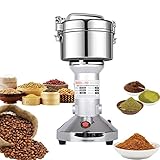
This compact electric grinder is designed for dry ingredients, including wheat, corn, rice, barley, soybeans, coffee beans, spices, herbs and nuts. Its listed specifications include a 150-gram capacity, a 900-watt motor and adjustable fineness from 50 to 300 mesh. Overload protection adds some reassurance, although the operating instructions call for short grinding sessions with rest periods in between.
Why it stands out
- It handles a broad range of dry pantry ingredients in small batches.
- The listed 50-to-300-mesh range offers considerable control over fineness.
Good to know: Use dry materials only, keep the bin no more than two-thirds full, and clean the grinding tank with a cloth or brush rather than rinsing it directly with water.
Best for: Small households that want quick electric grinding for modest quantities of grain, spices, herbs or nuts.
#4: Three-Disc Hand-Crank Food Mill
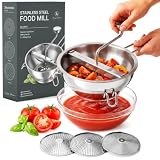
This manual food mill is intended for cooked applesauce, tomato sauce, purees, mashed potatoes, baby food and jam bases. Its stainless steel body, crank and three interchangeable discs provide coarse, medium and fine textures without requiring an outlet. That makes it useful during canning season or whenever the kitchen is already competing for every available plug.
Why it stands out
- The hand crank works without electricity.
- Three stainless steel discs provide coarse, medium and fine texture options.
Good to know: This is a cooked-food mill. It is not presented as a dry-grain grinder.
Best for: Home cooks making applesauce, tomato sauce, purees and other cooked foods in seasonal batches.
#3: Heavy-Duty Electric Grain Mill

This heavy-duty electric grinder is listed for wheat, rice, corn, sorghum, soybeans, cereal, spices and other dry foods. It combines a 3,000-watt motor with cast-iron grinding plates and a stainless steel funnel. An adjustable control changes the grinding thickness, while the funnel-shaped feed supports a steadier flow of ingredients during operation.
Why it stands out
- The powerful electric design suits larger dry-grinding jobs.
- An adjustable control changes the thickness for different listed grains and foods.
Good to know: The supplied information describes this as a dry grinder. Keep ingredients and preparation within the listed dry-food applications.
Best for: Households processing larger quantities of dry grain and wanting speed more than power independence.
#2: Stainless Steel Food Mill for Hot Purees
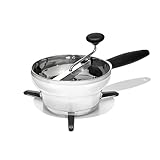
This manual stainless steel food mill is made for hot purees and cooked-food preparation. Three discs produce fine, medium and coarse textures. A spring-loaded lever helps with changing the discs and taking the mill apart, while three nonslip legs hold it over bowls and pots up to 11 inches in diameter. The legs fold when Thanksgiving is over and cupboard space becomes valuable again.
Why it stands out
- The stainless steel bowl is listed for hot foods and designed to resist staining.
- Folding legs and a spring-loaded disc lever make setup, storage and disc changes easier.
Good to know: Measure your preferred bowl or pot first. The legs are designed to fit vessels up to 11 inches in diameter.
Best for: Thanksgiving potatoes, squash, applesauce and other hot foods when stability and smooth texture matter.
#1: Hand-Crank Grain Mill with Table Clamp

Our top pick is a hand-crank mill designed for grains, corn, spices, nuts and coffee beans. It operates without electricity, and the grinding disc can be tightened to adjust fineness. A high hopper holds more grain at once, while the powder-coated cast-iron body is listed to resist rust and wear. The table clamp and dust cover support steadier work and help contain scattered powder.
Why it earns the top spot
- It turns shelf-stable dry ingredients into usable food without depending on electricity.
- The adjustable grinding disc, high hopper and table clamp make it a practical household tool rather than an emergency novelty.
Good to know: The clamp fits table openings from 0.79 to 1.58 inches. Check the intended work surface before ordering.
Best for: Homesteaders, practical households and preparedness-minded cooks who want a durable manual way to process dry ingredients.
Final thoughts
The hand-crank grain mill is our best overall choice for practical food independence because it handles several dry ingredients and remains useful without power. For Thanksgiving cooking, the stainless steel food mill at #2 is the better specialist for potatoes, squash, applesauce and hot purees. Choose the heavy-duty electric model when volume and speed come first, or the compact grinder when small batches suit the household.
The old skills deserve a place beside the new technology. Knowing how to turn stored ingredients into a meal is useful in ordinary seasons, changing times and the occasional kitchen crisis.
Frequently asked questions
What is the difference between a grain mill and a food mill?
A grain mill grinds dry ingredients such as wheat, corn, rice, spices or coffee beans. A food mill presses cooked ingredients into sauces, purees or mashed foods. Use the tool designed for the ingredient rather than treating the two types as interchangeable.
Which mills work without electricity?
The two cooked-food mills and the hand-crank grain mill operate manually. The compact dry-ingredient grinder and heavy-duty grain mill require electricity.
Which mill is most useful for Thanksgiving cooking?
The stainless steel food mill at #2 is the strongest Thanksgiving specialist because it is designed for hot foods, offers three textures and sits over compatible bowls or pots.
What should I measure before buying?
Check the diameter of the bowl or pot for the stainless steel food mill and the thickness of the work surface for the clamped grain mill. Also confirm capacity, electrical requirements and cleaning instructions for the chosen model.
Thanks for supporting our mission to make the world a better place for everyone, bugs included.