
We are growing The Plan Bees for the homesteading and gardening crowd. No pun intended, although now that it has sprouted, we are keeping it. Gardens need good soil. Growing businesses need good customers. Both become stronger when we stop guessing and start paying attention to what is actually there.
A garden bed may look quiet, but beneath the surface, mineral particles, pore spaces, water, roots, fungi, bacteria, arthropods, and earthworms are running a small underground civilization. The USDA Natural Resources Conservation Service describes healthy soil as a living ecosystem whose structure and biology influence water retention, nutrient storage, and nutrient cycling. Soil pH affects nutrient availability and microbial activity, while partnerships between legumes and rhizobia can bring biologically fixed nitrogen into the system.
That is why this list stretches beyond simple test strips. It begins with two ambitious classroom studies, moves through contamination screening and a broad soil-properties laboratory, and ends with the practical test most gardeners can use repeatedly. Welcome to the dirt on dirt.
Quick answer
For most gardeners and homesteaders, the 50-test soil pH kit is the best place to begin because pH influences nutrient availability and helps explain why an apparently well-fed plant may still struggle. Teachers and advanced homeschoolers who want a fuller investigation should consider the physical and chemical properties kit. The lead kit addresses one specific safety question, while the nitrogen-cycle and micropropagation kits explore the living processes that connect soil, microbes, and plants.
How we chose
We compared current Carolina specifications, the number of students or tests supported, the scientific questions each kit can answer, and its usefulness for gardeners, homesteaders, homeschoolers, or classrooms. The ranking moves from the most specialized study to the most broadly practical choice.
Product contents, availability, voucher requirements, and shipping restrictions can change. Confirm current specifications and required materials with Carolina before purchase.
Reviewed by Carol Maier, B.Sc., professional entomologist and founder of the original Victoria Bug Zoo.
Affiliate disclosure: This article contains affiliate links to Carolina Biological. If you make a purchase through one of these links, Bug Zoo may earn a commission at no additional cost to you.
#5: Miniature Rose Micropropagation Class Kit
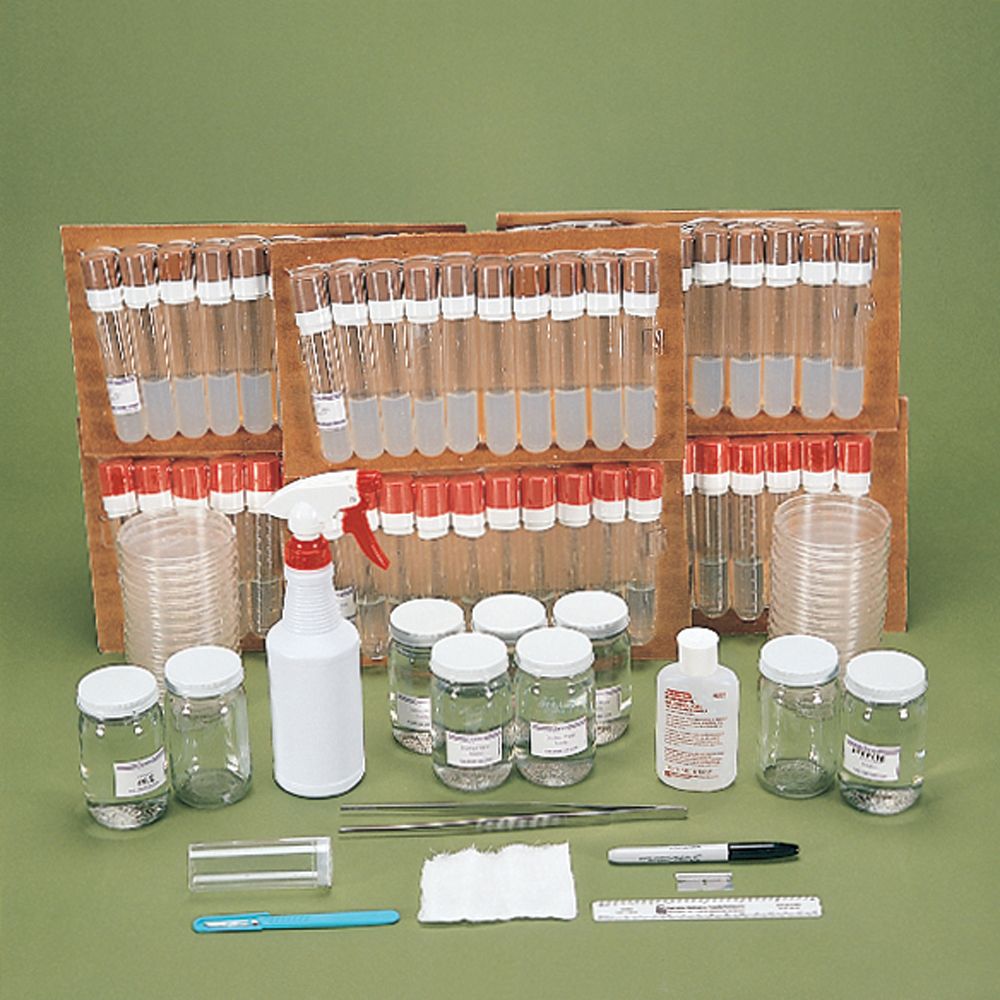
This is the magnificent oddball in the potting shed. Students begin with nodal pieces from a miniature rose, establish them in sterile culture, encourage shoots and roots, and eventually transfer the young plants into soil. It is a sophisticated way to watch a small piece of plant tissue become an independent plant.
Why it earns a place
- The class kit is designed for 30 students.
- It includes initiation and rooting media in culture tubes, instructions, and a voucher for perishable materials.
- It connects plant physiology, sterile technique, propagation, and the delicate transition back into soil.
Good to know: You will need additional locally supplied materials, including a suitable miniature rose, measuring equipment, disinfectants, and materials for potting the rooted plants. This is a laboratory-style project rather than an afternoon garden test.
Best for: High school classrooms, ambitious homeschool groups, horticulture programs, and plant people who enjoy doing science with their sleeves rolled up.
#4: Nitrogen Cycle and Rhizobium Study

Here the soil begins to breathe. Students grow clover with and without Rhizobium, measure nitrogenous compounds in the soil, compare plant biomass, and examine root nodules. Those nodules are biological workshops where compatible bacteria help legumes convert atmospheric nitrogen into a usable form. The relationship is one of agriculture's great invisible alliances, and the USDA Agricultural Research Service has described its importance to clover and low-input agriculture.
Why it earns a place
- Students compare inoculated and uninoculated clover instead of merely reading about nitrogen fixation.
- The activities include soil chemistry, biomass, and root-nodule observations.
- The kit supports 30 students working in pairs.
Good to know: This is designed for grades 9 to 12 and includes a voucher for perishable materials. Carolina asks customers to return the voucher at least two weeks before the requested delivery date.
Best for: Biology, agriculture, environmental science, and advanced homeschool programs studying living soil.
#3: Five-Test Lead Soil Screening Kit
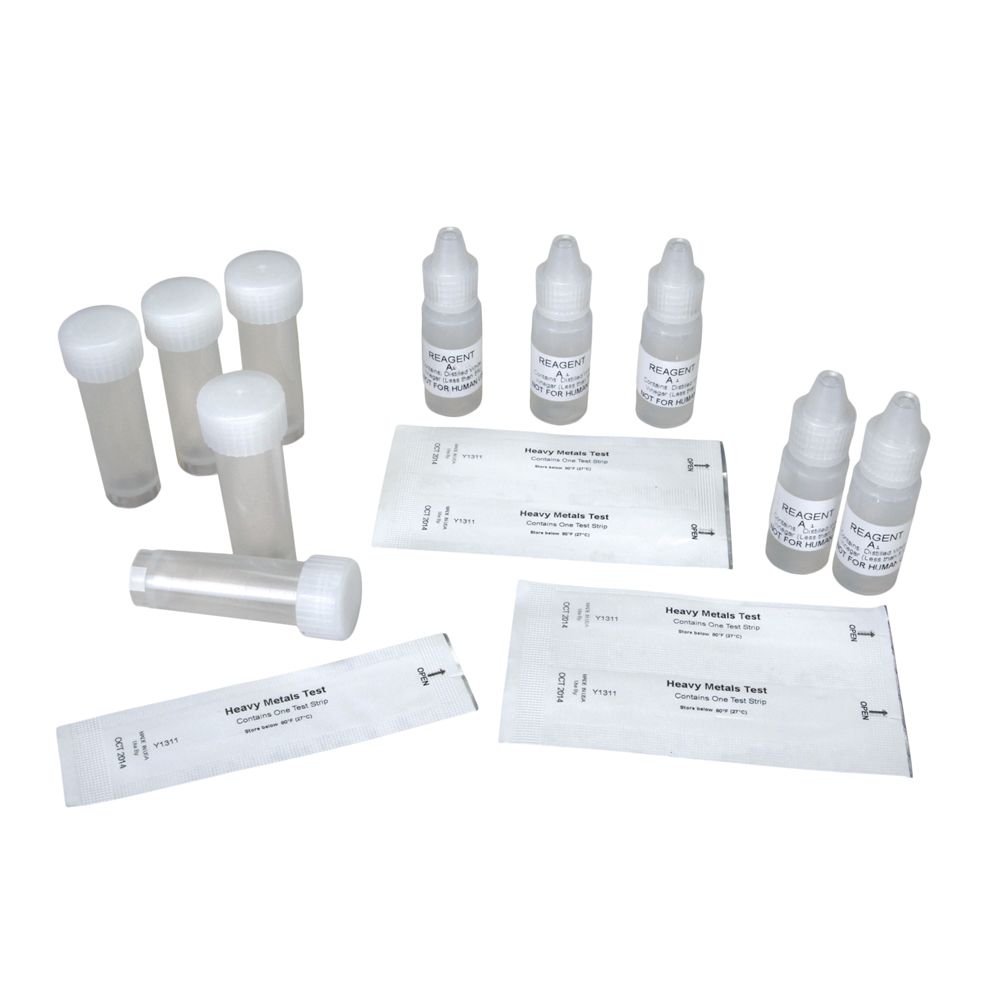
Before planting food beside an older building, roadway, workshop, or property with an uncertain history, lead may be the question that matters most. This kit uses a three-step color-change procedure, includes materials for five soil tests, and provides a reading up to 100 ppm.
Why it earns a place
- It addresses one clearly defined contaminant.
- Five tests allow comparison among several locations or samples.
- The procedure is designed to produce results within minutes.
Good to know: Treat this as an educational screening tool. When lead exposure or food-garden safety is a genuine concern, the US Environmental Protection Agency recommends sending soil to a qualified laboratory for concentration testing.
Best for: Classroom comparisons and preliminary investigation of soil from sites with a history worth examining.
#2: Physical and Chemical Properties of Soil Class Kit
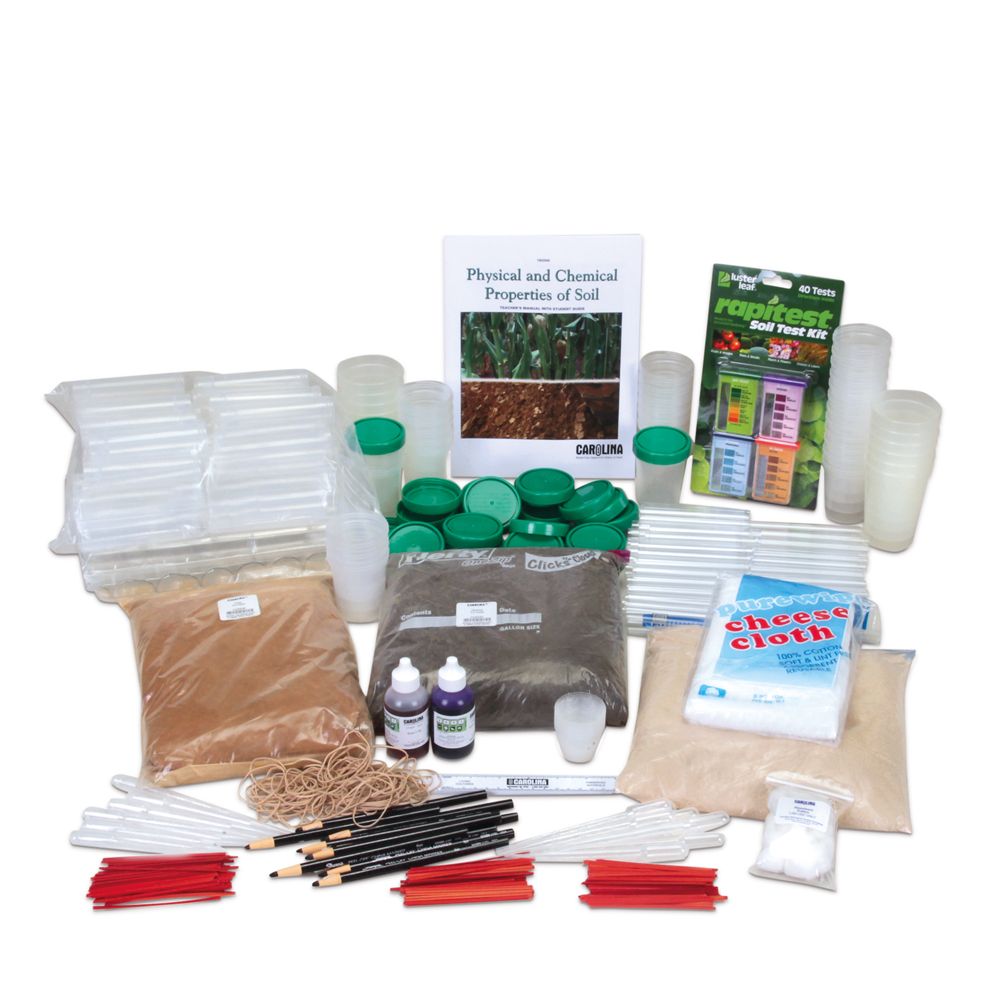
This is the full soil detective kit. Students investigate composition, water-holding capacity, permeability, pH, macronutrient ions, and ion-exchange capacity, then connect those properties with plant growth and agricultural economics. Soil structure matters because it shapes infiltration, drainage, root movement, gas exchange, and habitat for the organisms doing much of the underground work.
Why it nearly wins
- It examines physical and chemical properties together.
- The kit supports 30 high school students.
- Its scope makes it useful for agriculture, environmental science, horticulture, and advanced homeschool study.
Good to know: This is a substantial classroom laboratory kit. A gardener seeking one quick measurement will find it excessive, while a teacher building a serious soil unit may consider that breadth the entire point.
Best for: Teachers and homeschool cooperatives wanting a complete soil-science investigation.
#1: 50-Test Soil pH Kit
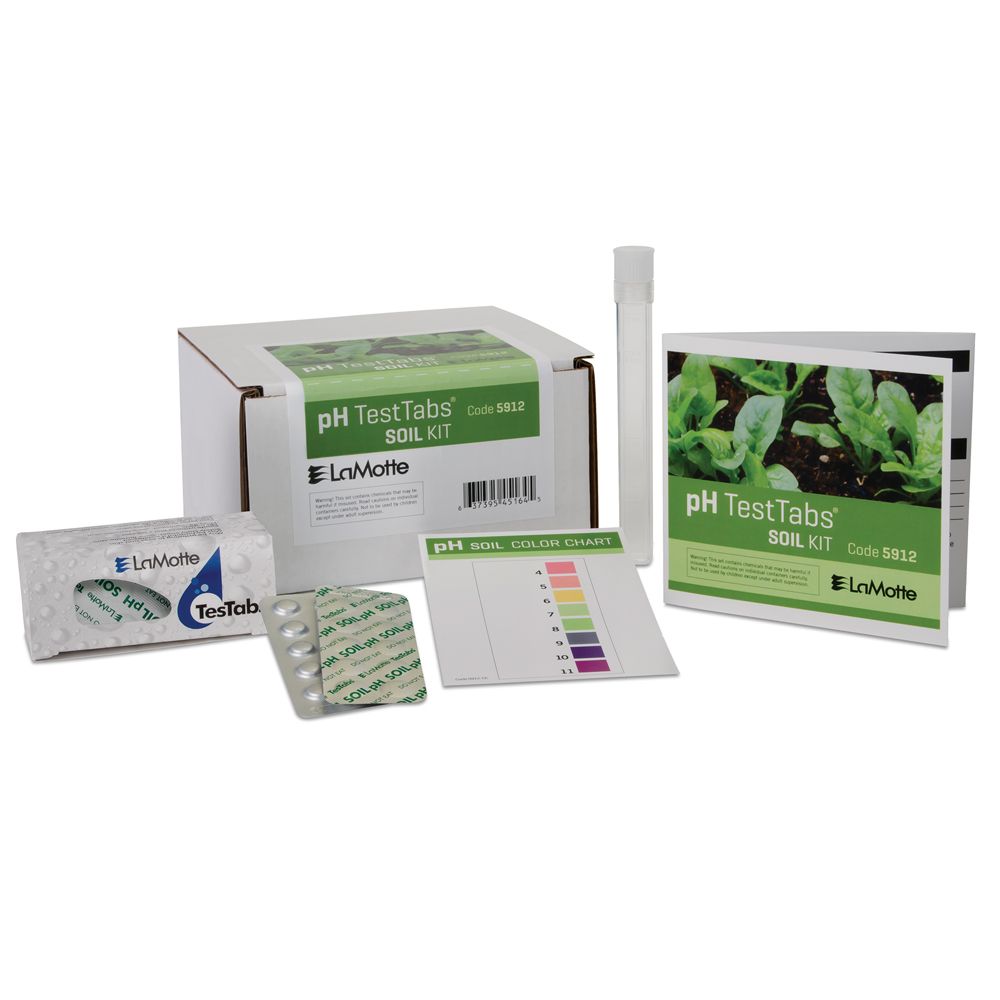
Our #1 pick answers the question a great many growers should ask before adding another bag, bottle, bucket, or lovingly fermented potion to the garden. Soil pH affects the availability of plant nutrients, microbial activity, and the performance of some soil amendments. This TesTabs kit covers pH 4 through 11 in one-unit increments and includes materials for 50 tests, making it useful for repeated garden-bed comparisons, greenhouse checks, demonstrations, and student investigations.
Why it wins
- Fifty tests provide excellent scope for repeated observations and comparisons.
- The laminated color chart and tablet format avoid liquid indicators.
- It is practical for growers while remaining useful in classrooms and homeschool settings.
Good to know: The procedure requires distilled or deionized water. Its one-unit increments are appropriate for demonstrations and general comparisons, but precision nutrient-management decisions may justify a professional laboratory soil analysis.
Best for: Gardeners, homesteaders, greenhouse growers, classrooms, and homeschoolers beginning a practical soil-testing habit.
Grow with evidence
Good soil is built through observation, testing, patience, and a willingness to be surprised. The pH kit gives most growers the strongest practical beginning. The comprehensive soil-properties kit gives educators the richest classroom experience. The remaining three reveal different chapters in the same story: contamination, microbial partnership, and the remarkable ability of plant tissue to begin again.
We are growing The Plan Bees with exactly that spirit. Look closely, ask better questions, test the assumptions, and give useful ideas somewhere fertile to land.
Thanks for supporting our mission to make the world a better place for everyone, bugs included.
Frequently asked questions
What soil test should a gardener try first?
A pH test is a useful starting point because pH affects nutrient availability and microbial activity. A professional laboratory analysis provides more detail when you need amendment recommendations or precise nutrient measurements.
Can these science kits be used for homeschooling?
Yes, provided the activity matches the students' level and the supervising adult reviews the instructions and required materials. The larger class kits are sized for 30 students, so they may suit homeschool cooperatives better than a single household.
Is a home lead soil test enough for a food garden?
A screening kit can raise a useful preliminary question. For decisions involving exposure or food production, the EPA recommends analysis by a qualified laboratory that can report lead concentrations.
Why include nitrogen fixation in a soil-science roundup?
Soil fertility includes biological processes. Rhizobia living in compatible legume root nodules fix atmospheric nitrogen, demonstrating how microbes and plants can change the nutrient economy of a garden or field.