
Motherhood has many clocks. Some are set by school bells and bedtime stories. Others are set by breakfast bowls, deworming medicine, walks, and the soft patter of paws across the floor. The little souls in our care become the heartbeat that gives rhythm to our days. They teach us when to stop, when to step outside, when to come home, and how much of a life can be measured in small, repeated acts of love.
Bees keep time, too. Honey bee foragers can remember when particular flowers are likely to offer nectar or pollen, then schedule their visits around those daily rewards. Their internal clocks also help them compensate for the sun's movement as they navigate and communicate direction through the waggle dance. A fascinating review titled Time is honey explores the intertwined daily rhythms of bees and flowers.
The history is full of brilliant women. In 1929, German zoologist Ingeborg Beling demonstrated time memory in honey bees, helping establish that an animal could learn when a food reward would appear. Karl von Frisch and Martin Lindauer later showed how bees combine an internal clock with celestial information to keep their sun compass accurate as the day advances.
A tiny bee worn close to the body can carry all of that meaning: work, devotion, navigation, memory, and the inner clock that brings us home. This countdown begins with the most playful styles and leads to our favorite pair, a bright little bumblebee that offers sparkle, character, and easy everyday wear.
Quick answer
The sparkling gold-tone bumblebee studs take our #1 position. They offer the clearest bee design, useful listed dimensions, secure post backs, and enough color and sparkle to feel joyful without becoming cumbersome. Small gold-plated flatback studs are our quieter #2 choice, while the dangle options suit moms who enjoy more movement and personality.
How we chose
We compared the five supplied pairs by silhouette, closure, stated materials, size, visual character, gift presentation, and how clearly each design celebrates bees. The ranking also considers everyday wearability and the practical differences among hooks, post backs, huggie hoops, and flatback screwback closures.
Product details, availability, and shipping restrictions can change. Confirm current dimensions, materials, finish, closure, and package contents with the retailer before purchase. Anyone with metal sensitivities should review the complete manufacturer information carefully.
Reviewed by Carol Maier, B.Sc., professional entomologist and founder of the original Victoria Bug Zoo.
Affiliate disclosure: As an Amazon Associate I earn from qualifying purchases. This article contains affiliate links. If you make a purchase through one of these links, Bug Zoo® may earn a commission at no additional cost to you.
#5: Gold Huggie Hoops with Mixed Nature Charms

This gold-plated huggie design is the charming outlier in the collection. The supplied listing reaches beyond bees into a broader beach, celestial, and nature theme that includes starfish, butterflies, moons, stars, and seashells. That mixed character can suit a mom whose jewelry box already wanders freely from the garden to the shoreline.
The secure huggie hoop format is described as easy to wear and snug. Its polished gold finish gives the pair a more refined presence than the acrylic statement earrings later in the countdown.
Why it earns a place
- The huggie closure offers a compact alternative to hooks and traditional post backs.
- Its collection of nature motifs can appeal to someone whose curiosity extends well beyond a single species.
Good to know: This listing contains several coastal and celestial motifs, so inspect the selected variation carefully when a clearly recognizable bee is essential.
Best for: Moms who enjoy small gold hoops and a playful mixture of natural symbols.
#4: Colorful Lightweight Acrylic Bee Dangles

These acrylic bee dangles bring the biggest burst of color to the countdown. Their sparkly resin styling and visible bee shape turn a small accessory into a cheerful statement, while the lightweight construction is intended to keep the larger silhouette comfortable.
The supplied styling notes pair them with office clothing, evening wear, casual outfits, and jeans. They would also be delightfully at home during a school science fair, garden party, pollinator event, or a child's enthusiastic lecture about the importance of bees.
Why it earns a place
- The bright acrylic design offers the boldest and most playful bee look in the group.
- Lightweight materials provide a larger visual presence without the weight of a heavy metal pendant.
Good to know: The colorful statement style makes a stronger impression than the smaller stud options.
Best for: Expressive moms, teachers, and bug lovers who enjoy jewelry with color, movement, and a sense of humor.
#3: Honeycomb and Bee Dangle Earrings
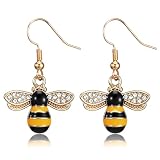
These decorative dangles combine honeycomb-inspired details, bee pendants, and jewel accents on the wings. Silver ear hooks support sturdy alloy pendants, creating movement and a clearly visible pollinator theme. The design feels especially suited to someone who enjoys having her jewelry start a conversation.
The supplied details include individual packaging for storage or gifting. The familiar symbolism of a busy bee also makes this pair an affectionate choice for a mother, beekeeper, gardener, teacher, or devoted caretaker who somehow keeps an entire small universe moving.
Why it earns a place
- The pairing of bees and honeycomb tells a complete visual story.
- Jeweled wings and dangling pendants provide more movement and sparkle than a compact stud.
Good to know: The longer dangle profile suits someone comfortable with visible movement near the face.
Best for: Gift shoppers seeking a recognizable bee-and-honeycomb design with a decorative presence.
#2: Small Gold-Plated Flatback Bee Studs
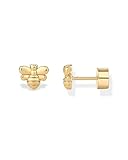
These PAVOI bumblebee studs measure 6.7 by 5.7 millimeters and use flatback screw closures. The small scale and warm 14K yellow-gold-plated finish create a quieter interpretation of bee jewelry, with the flatback design offering a distinct alternative to hooks, hoops, and standard post backs.
The supplied product information describes the pair as nickel safe, lead safe, and cadmium compliant. It also states that the jewelry and packaging incorporate recycled materials. A gift box is included.
Why it nearly wins
- The petite bee silhouette works well for someone who prefers understated everyday jewelry.
- Flatback screw closures can appeal to wearers who dislike a traditional post protruding behind the ear.
- Specific dimensions and stated material-compliance details make the practical comparison easier.
Good to know: The 6.7 by 5.7 millimeter size is deliberately subtle. Review the product's full material information when purchasing for someone with sensitivities.
Best for: Moms who want a tiny golden bee with a smooth flatback profile and minimal visual fuss.
#1: Sparkling Gold-Tone Bumblebee Studs
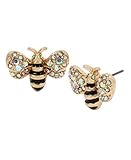
Our favorite pair comes from Betsey Johnson and captures the cheerful audacity of a bumblebee in a compact stud. Pave stone accents add sparkle, striped details make the insect immediately recognizable, and the gold-tone setting gives the design warmth. The earrings measure 0.5 inches long by 0.75 inches wide and use post-back closures.
This pair strikes the strongest balance in the countdown. The bees are bright enough to start a conversation, small enough for regular wear, and distinctive enough to feel like a real gift rather than another generic accessory. A child who loves bugs can recognize the subject instantly, which makes the earrings especially charming for a mother receiving them from a young naturalist.
Why it takes the top spot
- The bumblebee shape, yellow stripes, and stone accents create the clearest and most joyful bee design.
- Listed dimensions make the scale easier to judge before purchasing.
- The compact post-back format offers everyday wearability with plenty of personality.
Good to know: These studs use traditional post backs and gold-tone metal. Confirm the complete material details when buying for someone with sensitivities.
Best for: Bug-loving moms who want a recognizable bumblebee, a little sparkle, and a story their children can share.
Final thoughts
The sparkling gold-tone bumblebee studs earn our #1 position for their unmistakable bee shape, practical size, joyful color, and everyday character. The small flatback studs offer the best understated alternative. Choose the honeycomb dangles for a more symbolic gift, the acrylic bees for maximum fun, or the mixed nature hoops for someone whose jewelry collection roams across the whole wild world.
Small things often become our timekeepers: a bee returning when the flowers open, a golden insect beside a cheek, or paws approaching across a familiar floor. Their presence marks the day. Their rhythm stays inside us.
A pair of bee earrings can hold more than decoration. It can become a little golden reminder of devotion, curiosity, and the precious lives that teach us how to spend our time.
Thanks for supporting our mission to make the world a better place for everyone, bugs included.
Frequently asked questions
Which bee earrings are best for everyday wear?
The sparkling gold-tone bumblebee studs at #1 offer a compact post-back design with strong visual character. The smaller gold-plated flatback studs at #2 suit someone who prefers a subtler profile.
Which pair makes the most playful gift from a child who loves bugs?
The colorful acrylic dangles deliver the boldest fun, while the sparkling bumblebee studs provide an instantly recognizable bee in a more compact form. A child's own sense of the recipient's style may be the best final clue.
What earring closures appear in this countdown?
The collection includes traditional post backs, flatback screw closures, ear hooks, and huggie hoops. Closure preference can matter as much as appearance, especially for regular wear.
Do honey bees really have a sense of time?
Yes. Honey bee foragers use circadian clocks to anticipate daily food rewards and help compensate for the sun's changing position during navigation. Their remarkable time memory has been studied experimentally since Ingeborg Beling's work in 1929.