

A patch of grass, a garden path or a camping trip can become a small field study when children have the right way to look at insects up close. The best kit depends on whether they want to catch and release, examine a specimen, or build a more structured nature activity.
This roundup compares five insect observation kits for kids by their supplied tools and design details. Consider the child’s age range, the kind of viewing experience they want, portability, and whether the set focuses more on catching live insects, magnification, pretend play, or guided STEM exploration.
Grab your junior naturalist and check out the reviews, fluttering from our #5 pick all the way to our number one choice!
Quick answer
The best insect observation kit for kids depends on how they want to explore. B. toys offers a simple four-piece starter set, Blue Marble provides a habitat with two magnifying viewers, and the wooden kits add structured magnification, outdoor tools and guided STEM exploration. Compare age range, portability, viewing style and catch-and-release features before choosing.
How we chose
We compared each kit’s viewing method, portability, supplied tools, age guidance, catch-and-release design and educational usefulness. Product details can change, so confirm current contents and age recommendations with the retailer before purchase.
Reviewed by Carol Maier, B.Sc., professional entomologist and founder of the original Victoria Bug Zoo. As an Amazon Associate, we may earn from qualifying purchases. This article contains affiliate links. If you make a purchase through one of these links, The Bug Zoo may earn a commission at no additional cost to you.
#5: Wooden Bug Catcher Kit for Kids 3-8, 10PCS Durable Outdoor Explorer Kit with Magnifying Glass, Butterfly Net & STEM Guide, Catch & Release Adventure Set for Backyard & Camping

The ibwaae Wooden Bug Catcher Kit is an outdoor explorer set for children ages 3 to 8. Its supplied components include a wooden observation box with a magnifying glass and breathable air holes, tweezers, a compass, a clamp, and a retractable butterfly net. An organizer ring is designed to keep the pieces together, while the set also includes identification charts and life cycle guides. The catch and release design gives children a way to observe insects closely before returning them to nature.
Why it stands out
- The wooden kit includes an observation box with a magnifying glass and breathable air holes.
- Identification charts and life cycle guides add a structured STEM element to outdoor exploration.
Good to know: The supplied description lists several accessories, including a compass, clamp, tweezers, and retractable net, so this is geared toward children who want an active collecting kit rather than a simple viewer.
Best for: Best for young backyard or camping explorers who want a catch and release set with nature guides.
#4: Insect Observation Kit for Kids, Multi-Magnification Rotating Viewer with Color Filters, Wooden STEM Nature Exploration Science Toy with Tweezers, Petri Dish and 6 Insect Models, Gift for Ages 4-8
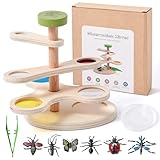
The WOODEN TEETHER Insect Observation Kit takes a different approach by centering the activity on a wooden viewing station rather than a traditional bug house. It includes a three-layer rotating, multi magnification scope, color filters, a clear petri dish, strap on tweezers, and six insect models. The lenses rotate and slide along a center rod with a spring bead mechanism, and the kit can also display sealed resin specimen blocks, though specimens are not included.
Why it stands out
- Three rotating lenses and color filters provide multiple supplied viewing options.
- The kit includes six insect models and a clear petri dish for indoor or imaginative nature activities.
Good to know: The listed age range is 4 to 8, and the description says steady pressure from a child or adult is needed to move the lenses.
Best for: Best for ages 4 to 8 who enjoy hands on magnification and a portable wooden STEM activity at home, in class, or outdoors.
#3: National Geographic Bug Catcher Kit and Outdoor Insect Habitat for Kids

Blue Marble’s National Geographic Bug Catcher Kit combines a catch and observe setup with a habitat designed for extended viewing. The habitat has a 360-degree view, a removable base, an easy open latching lid, and two magnifying viewers. One magnifier stays stationary while the other telescopes and moves, giving children different ways to watch what they have caught. A scissor style bug catcher, net, and tweezers complete the supplied collecting tools.
Why it stands out
- The habitat offers a 360-degree view with two built in magnifying viewers.
- Its removable base gives children a place to add natural objects while observing insects.
Good to know: The supplied description emphasizes observing bugs in their natural state, so children will need to find suitable natural objects and insects separately.
Best for: Best for children who want a dedicated habitat with several viewing angles and traditional catching tools.
#2: Bug Catcher for Kids, 17 PCS Bug Catching Kit with Bug Collector Toy Bugs
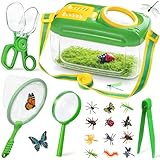
The HAIMST Bug Catching Kit is a broad 17-piece set built around outdoor discovery and group play. It includes a bug viewer box with a magnifier, a hand magnifying glass, butterfly net, capsule insect clip, tweezers, and 12 bug toys. The supplied description also lists an adjustable strap for carrying the bug habitat and says the scissor style catcher is suitable for catching insects without hurting them. The extra toy insects extend the activity beyond the backyard.
Why it stands out
- The 17-piece set combines live bug observation tools with 12 bug toys.
- An adjustable strap is supplied for carrying the bug habitat outdoors.
Good to know: Because the set includes both collecting equipment and toy insects, it supports imaginative play as well as outdoor observation, rather than focusing solely on a habitat.
Best for: Best for young explorers who want a large activity set for shared backyard play and discovery.
#1: B. toys Bug Bungalow Bug Catching Kit with Mesh Bug House Case, Summer

The B. toys Bug Bungalow is a straightforward four-piece insect catching kit for children ages 3 and up. It includes a mesh case, a container with a magnifying lid, tweezers, and a separate magnifier. Children can place bugs in the mesh case, then use either the lidded container or handheld magnifier for a closer look. Its compact set of clearly defined tools keeps the activity centered on catching and examining little backyard critters.
Why it stands out
- The kit provides both a mesh case and a container with a magnifying lid.
- A separate handheld magnifier and tweezers support close examination and handling.
Good to know: The supplied kit contains four pieces and does not list extra guides, toy insects, or a carrying strap.
Best for: Best for ages 3 and up who want a simple, focused starter kit for catching and examining backyard insects.
Final thoughts
These five kits suit different kinds of curious observers. The B. toys Bug Bungalow keeps the basics clear and compact, while the HAIMST set adds more accessories and toy insects for broader play. Blue Marble centers on a dedicated habitat with two viewing systems. The wooden WOODEN TEETHER kit favors magnification and specimen style exploration, and ibwaae combines outdoor catching with guides and release focused observation. Start with the child’s preferred activity, then match the tools, age range, and portability to the way your family explores nature.
Frequently asked questions
Which kit is the simplest option for young children?
The B. toys Bug Bungalow is recommended for ages 3 and up and includes four focused tools: a mesh case, magnifying container, tweezers, and magnifier.
Which insect kit offers multiple built in viewing options?
Blue Marble’s habitat includes two magnifying viewers. One stays stationary, while the other telescopes and moves for observing insects in action.
Which kits include features beyond a basic bug catcher?
The HAIMST set includes 12 bug toys and a carrying strap, the WOODEN TEETHER kit includes rotating magnification lenses and color filters, and ibwaae includes identification charts and life cycle guides.