
Nature made the first stained glass, the first iridescent jewelry, the first articulated armor, and the first wings delicate enough to look like they were painted with light. A butterfly, beetle, dragonfly, or moth does not need an artist’s embellishment. It arrives breathtaking by nature.
A preserved insect can have two lives. The first unfolds in the wild, shaped by evolution, habitat, weather, camouflage, courtship, hunger, and survival. The second begins when that intricate little body becomes a scientific record, a teaching object, a memory of place, or a work of natural art that inspires someone to look more closely.
This countdown compares five possible homes for those collected wonders, from protective archival boxes to transparent wooden cases and a compact Riker-style frame. Our favorite waits at #1, but the right format depends on whether the goal is artistic display, organized storage, or an actively studied scientific collection.
Quick answer
For a small, artful display, the 4-by-3-inch Riker-style frame is our top pick because it is the only option here explicitly presented in a traditional natural-history display format. The wooden window box is the more decorative choice for a small visible collection. Gaylord Archival and Archival Methods provide the clearest stated archival-board specifications, but neither is described as a purpose-built insect drawer or as including an internal pinning surface.
Important distinction: A decorative display, an archival storage box, a scientific insect drawer, and a container for fluid-preserved material are not interchangeable. Confirm the internal materials, depth, closure, mounting method, and intended use before placing an important collection inside.
Display beautifully, collect thoughtfully
Insect collections have enormous scientific, educational, historical, and artistic value. Before collecting, check the rules for the location and species involved, respect protected areas and private land, and never remove a rare or protected insect. Naturally deceased insects, responsibly collected material, and legally obtained prepared pieces can all become meaningful records when they retain good labels and collection information.
For scientific value, beauty is only half the story. A tiny label recording where, when, and by whom an insect was collected can turn a lovely object into useful evidence of geography, season, habitat, and change over time.
How we chose
We compared the five supplied options by their stated materials, closure, visibility, labeling features, portability, dimensions, and suitability for either display or protected storage. Because this article centers on the artistic inspiration of an insect collection, the countdown favors options that let the insect remain visible while still acknowledging the stronger material specifications of the two opaque archival boxes. Our assessment is based on the supplied product information and professional editorial review, not personal product testing.
Product details, availability, and shipping restrictions can change. Confirm current contents, dimensions, materials, specifications, and requirements with the retailer before purchase.
Reviewed by Carol Maier, B.Sc., professional entomologist and founder of the original Victoria Bug Zoo.
Affiliate disclosure: As an Amazon Associate I earn from qualifying purchases. This article contains affiliate links. If you make a purchase through one of these links, Bug Zoo® may earn a commission at no additional cost to you.
#5: The Locking Vintage-Style Wooden Display Case

This Homoyoyo case has the charm of a miniature cabinet of curiosities. The supplied description identifies wood and acrylic construction, a transparent lid, a lock, and a sealing effect. It is marketed broadly for insects, jewelry, coins, crafts, and other small collected treasures.
That versatility is attractive, but the available information is too limited for us to treat it as a conservation-grade insect case. No dimensions, interior layout, pinning surface, or archival-material credentials are provided in the supplied record.
Why it stands out
- The transparent lid keeps selected pieces visible while the case remains closed.
- The wooden body and lock give it the strongest old-fashioned curiosity-cabinet personality in the group.
Good to know: Although the marketplace title mentions wet material, the supplied details do not establish liquid containment or suitability for fluid-preserved insects. Do not use it for that purpose without specific confirmation.
Best for: Decorative arrangements of dry natural-history objects when the buyer has independently confirmed the case dimensions and interior setup.
#4: The Archival Clamshell Preservation Box

This Gaylord Archival clamshell box is the material-information heavyweight of the countdown. Its supplied specifications identify acid-free, lignin-free, buffered 60-point barrier board that has passed the Photographic Activity Test. The clamshell opens fully, and the deep lid closes tightly to help limit dust, dirt, and damaging light.
Those are meaningful preservation features, particularly for documents, photographs, labels, field notes, and other paper records surrounding a collection. The important limitation is equally clear: this opaque box is not described as an insect display case and does not include a stated interior insert or pinning surface.
Why it stands out
- It has the most detailed archival-board description among the five options.
- The full-opening clamshell and deep lid support protected, accessible storage.
Good to know: The listed dimensions are 10 1/4 inches wide by 12 1/4 inches long by 3 inches high. Confirm the interior fit and add only appropriate conservation materials for the intended contents.
Best for: Protecting collection records, photographs, paper materials, or specially prepared inner containers rather than creating a visible insect display.
#3: The Label-Ready Metal-Edge Archival Box

The Archival Methods short-top box is built for order. Its supplied description lists acid-free and lignin-free Archival Grade boxboard, metal-edge clamps for rigidity and stacking strength, and a close-fitted removable top designed to seal out dust and insects.
Embossed labeling areas on the end and lid front make this the strongest organizational choice in the group. A collector could use that structure for supporting records or appropriately contained materials, but the box is opaque and is not described as a purpose-built pinned-insect drawer.
Why it stands out
- Labeling areas support consistent identification across several stacked boxes.
- Metal-edge reinforcement and a close-fitted lid favor orderly enclosed storage.
Good to know: The listed size is 12.5 by 15 by 4.25 inches. No viewing window, pinning surface, or internal insect-support system is identified in the supplied information.
Best for: Collectors who value labels, stacking, and enclosed archival-board storage more than immediate visibility.
#2: The Portable Wooden Window Display Box
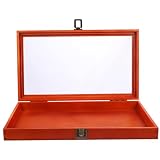
The Lurrose wooden box moves the collection out of storage and into view. Its transparent window lid is designed to show dried flowers, insects, rocks, and other small natural treasures while the box remains closed. The supplied description also calls it lightweight, portable, reusable, and well sealed.
Its vintage styling suits the artistic direction of this roundup, especially for a carefully arranged group of wings, beetles, seedpods, or other found wonders. The lack of dimensions and internal-material details prevents us from assuming that it will fit or preserve a particular insect without additional preparation.
Why it stands out
- The transparent lid turns a small collection into a visible composition.
- Lightweight wooden construction makes it the most portable showcase described here.
Good to know: No internal supports, pinning materials, dimensions, or archival credentials are identified in the supplied record. Confirm those details before using it for a fragile or scientifically important insect.
Best for: A decorative tabletop collection inspired by natural-history cabinets and the textures of the wild.
For the breathtaking finale: our top pick is modest in size, but it speaks the visual language of traditional natural-history display more clearly than anything else in this group.
#1: The Compact Riker-Style Display Frame

The BicBugs frame earns #1 because it is the only option in the countdown explicitly identified as a Riker-style insect display. The listed size is a compact 4 by 3 inches, making it suited to one small focal piece or a restrained arrangement rather than an entire collection. The product is also identified as made in the USA.
Riker-style mounts have long been associated with decorative natural-history displays. They can turn the geometry of a wing, the polished armor of a beetle, or the improbable delicacy of an insect body into a composition that invites prolonged attention. This one is sold empty, so the buyer remains responsible for choosing suitable internal presentation materials and confirming exactly what the frame includes.
Why it earns our top spot
- The Riker-style format is the clearest match for a small artistic insect display.
- The exact 4-by-3-inch size makes it easier to plan around a particular piece and wall or shelf location.
- Its empty format allows a collector to create a restrained composition instead of accepting a generic arrangement.
Good to know: The supplied record does not specify interior fill, glazing, mounting materials, closure details, or archival credentials. A Riker-style display is also less practical than a purpose-built drawer for insects that must be removed, studied, relabeled, or rearranged.
Best for: A small, carefully composed display that treats one collected insect as a breathtaking work of nature.
Final thoughts
The compact Riker-style frame is our best overall choice for a small artistic insect display because its format, exact dimensions, and empty interior invite a deliberate natural-history composition. Choose the wooden window box for a larger decorative arrangement, the Archival Methods box for label-ready stacked organization, or the Gaylord clamshell when clearly specified archival board and protection from light matter more than visibility.
For a working scientific collection, none of these five products is a demonstrated substitute for a well-fitted entomological drawer with appropriate pinning material, secure closure, collection labels, and routine inspection for pests. That distinction does not diminish the beauty of display. It protects the very thing that makes an insect collection so powerful: every piece can be breathtaking art and useful evidence at the same time.
The wild world created the masterpiece. A thoughtful display simply gives us more time to notice.
Frequently asked questions
Which option is best for a small decorative insect display?
The empty 4-by-3-inch Riker-style frame is our top choice for a small artistic arrangement. Confirm the included materials and select an appropriate mounting method before placing a fragile insect inside.
Which options provide the clearest archival-material information?
The Gaylord clamshell lists acid-free, lignin-free, buffered 60-point barrier board and a passed Photographic Activity Test. The Archival Methods box lists acid-free and lignin-free Archival Grade boxboard.
Is a Riker-style frame suitable for a scientific insect collection?
It can be useful for decorative display, but an actively studied collection generally needs accessible, well-labeled insects in purpose-built drawers or boxes with suitable pinning materials. A fixed display is less convenient when pieces must be examined, relabeled, or rearranged.
How can a collector help protect a displayed insect?
Keep the display dry, out of direct sunlight, protected from dust, and monitored for pests. Use only suitable interior materials, retain collection labels, and confirm that the enclosure closes securely without touching or crushing delicate structures.
Thanks for supporting our mission to make the world a better place for everyone, bugs included.