
Back-to-school science planning sends teachers and homeschoolers hunting for lessons that can survive contact with real kids and real distractions. These five Carolina science kits put soil chemistry, geometry, force, motion, and center of mass directly on the table, where students can test, build, launch, balance, measure, argue, and occasionally discover that the teacher was right all along.
The lineup that we have reviewed ranges from a complete soil-testing program for up to 50 students to compact Garage Physics kits designed for one team at a time. Every teacher or homeschool educator has practical questions before buying: How many students can use it? How much preparation does it require? Which grade levels will understand the concept? And will the demonstration still hold anyone's attention after lunch on a Friday? We answer those questions.
Quick answer
The LaMotte Topsoil Tour Kit is our best overall classroom choice because it supports 50 students and includes teacher materials, testing procedures, and data sheets. For a smaller group and immediate physics excitement, the Ping-Pong Catapult Kit earns second place. The Pythagorean and Theodorus kits turn abstract mathematics into wooden objects students can handle, while the Soda Center of Mass Kit creates a memorable balance demonstration with a two-liter bottle.
How we chose these classroom science kits
We compared grade range, number of students served, teacher support, preparation, curricular depth, and the clarity of each hands-on demonstration. Carolina describes the Garage Physics collection as suitable primarily for elementary and middle school, with many activities deep enough for high school. Each Garage Physics kit supplies materials for one student group and includes an instructional manual. The Topsoil Tour takes a full-class approach for Grade 4 and up.
Product details, availability, and shipping restrictions can change. Confirm current contents and purchasing requirements with Carolina Biological before ordering.
Reviewed by Carol Maier, B.Sc., professional entomologist and founder of the original Victoria Bug Zoo.
Affiliate disclosure: This article contains affiliate links to Carolina Biological. If you make a purchase through one of these links, Bug Zoo® may earn a commission at no additional cost to you.
#5: Soda Center of Mass Demonstration

A two-liter bottle balanced at an alarming angle can command a classroom rather efficiently. This compact kit demonstrates center of mass, stability, and base of support using a wooden balance board and lever arm. Students can see why an object remains stable when its center of mass stays above its base of support, then test what changes when mass or position moves.
Why it stands out
- The visual result is dramatic enough to start a useful discussion before a formula appears.
- The activity can scale from simple observation to calculations for older students.
Good to know: The kit includes the balance board, lever arm, pencil, storage box, and assembly and activity instructions. You will need a two-liter bottle. Older students may also use rulers and a small scale to calculate the center of mass.
Best for: Teachers and homeschoolers who want a compact demonstration of balance, stability, and center of mass.
#4: Spiral of Theodorus Geometry Blocks

The Spiral of Theodorus gives square roots a physical shape. Students assemble wooden right triangles into an expanding spiral, creating a tactile route into the Pythagorean theorem, irrational numbers, geometric sequences, and the strange beauty of mathematics that grows one triangle at a time.
Why it stands out
- The same wooden model supports age-appropriate discussions from right triangles and ramps to irrationality and approximating pi.
- Students can build, label, rearrange, and examine the mathematics instead of meeting it only as symbols on a page.
Good to know: The manufacturer lists 18 wooden triangles, labels, a pen, and an instruction guide with activities segmented by age group. This is a one-group kit rather than a full-class set.
Best for: Math and science teachers introducing square roots, right-triangle relationships, or irrational numbers through hands-on geometry.
#3: Pythagorean Theorem Puzzle
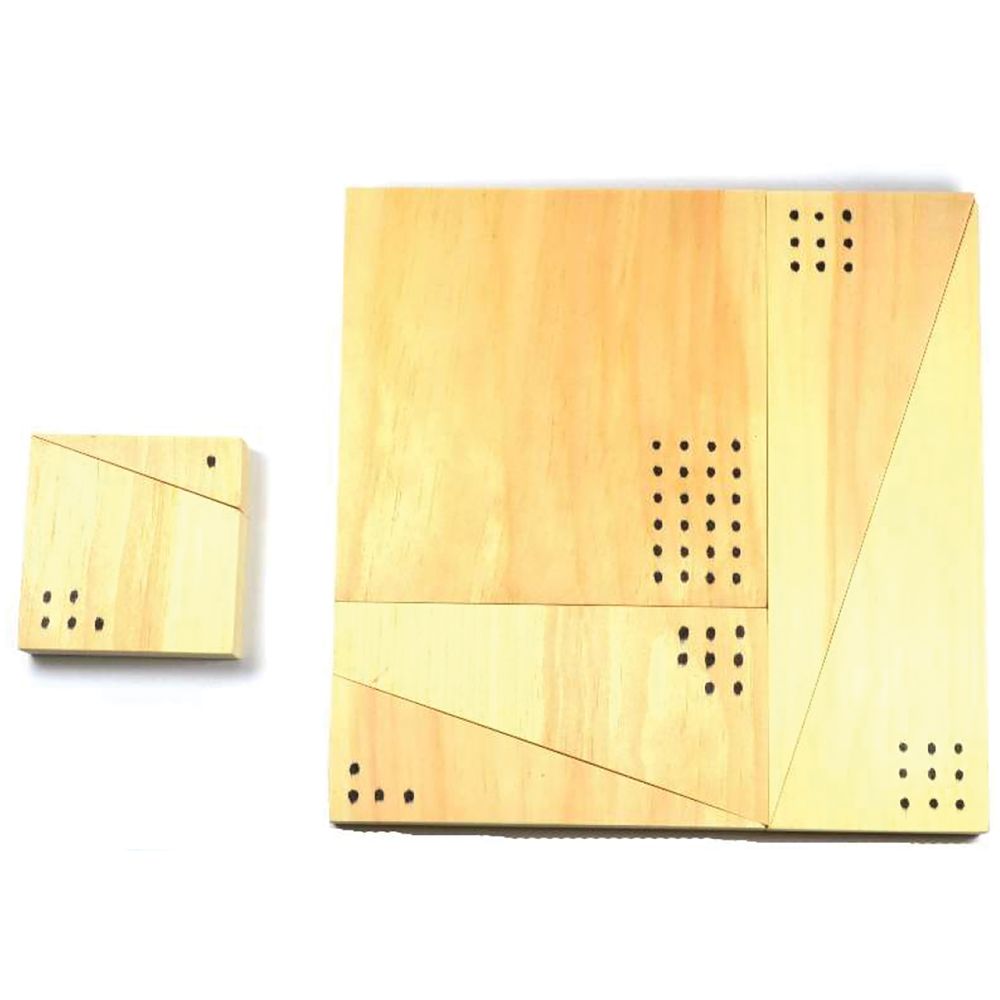
This seven-piece wooden puzzle lets students rearrange area into proof. Younger learners can investigate shapes and similarity, middle-school students can work through algebraic proofs, and advanced students can follow the theorem into historical proofs associated with President James A. Garfield and Albert Einstein.
Why it stands out
- One small puzzle can be revisited at several grade levels with increasingly sophisticated questions.
- The pieces make the relationship a² + b² = c² visible and movable.
Good to know: The kit includes seven puzzle pieces and an instruction guide organized by learning level. It is intended for one group, so several kits would be needed for simultaneous small-group work.
Best for: Teachers and homeschool educators who want a reusable, tactile bridge from basic geometry to mathematical proof.
#2: Ping-Pong Catapult Physics Kit
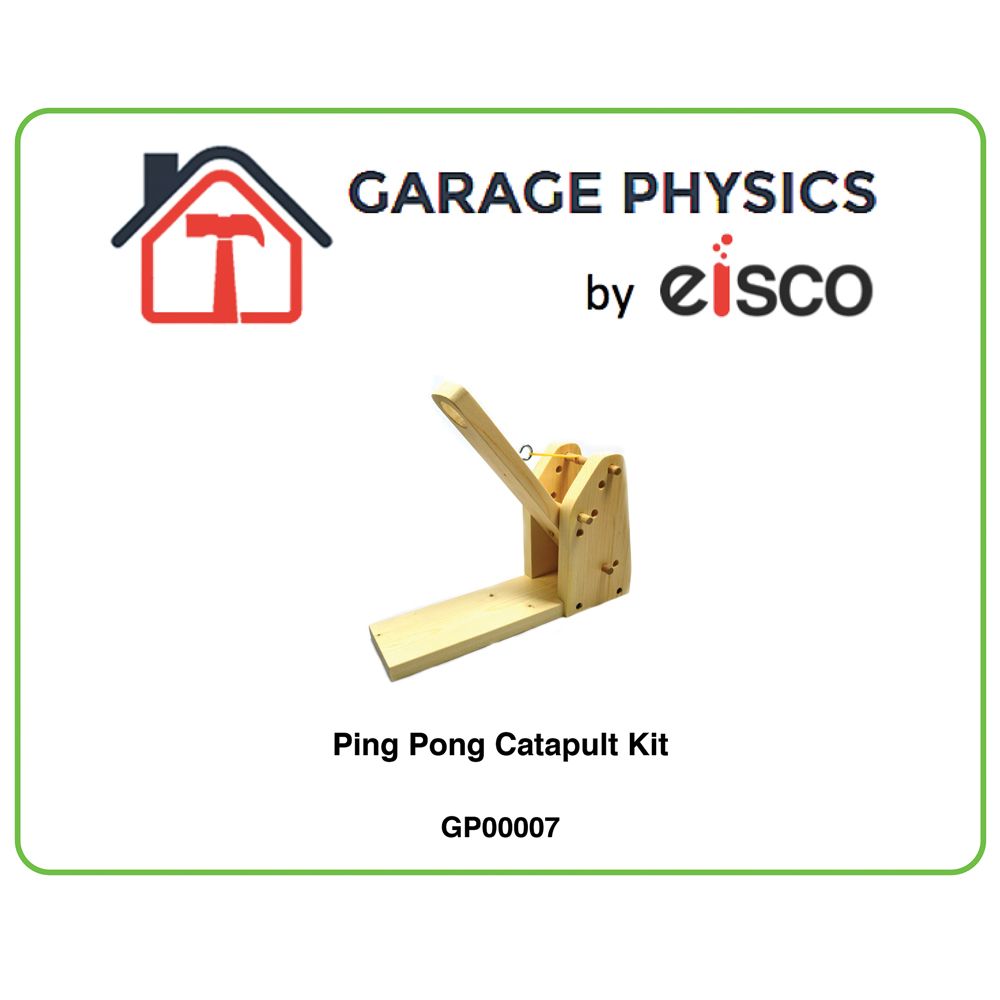
Few phrases wake up a classroom faster than, "We are going to launch something." Carolina says this wooden catapult can send a ping-pong ball more than 20 feet while students explore the history, physics, and geometry of catapults. It gives force, stored energy, trajectory, and measurement a visible consequence.
Why it stands out
- The launch creates immediate questions about force, angle, distance, repeatability, and experimental design.
- Historical engineering and modern physics meet in one memorable group activity.
Good to know: Plan for a clear launch area, define the firing line, and establish retrieval rules before the first ping-pong ball achieves freedom. The Garage Physics format supplies materials for one student group.
Best for: Teachers and homeschoolers looking for a high-energy force-and-motion lesson with measurable results.
#1: Topsoil Tour Classroom Testing Kit
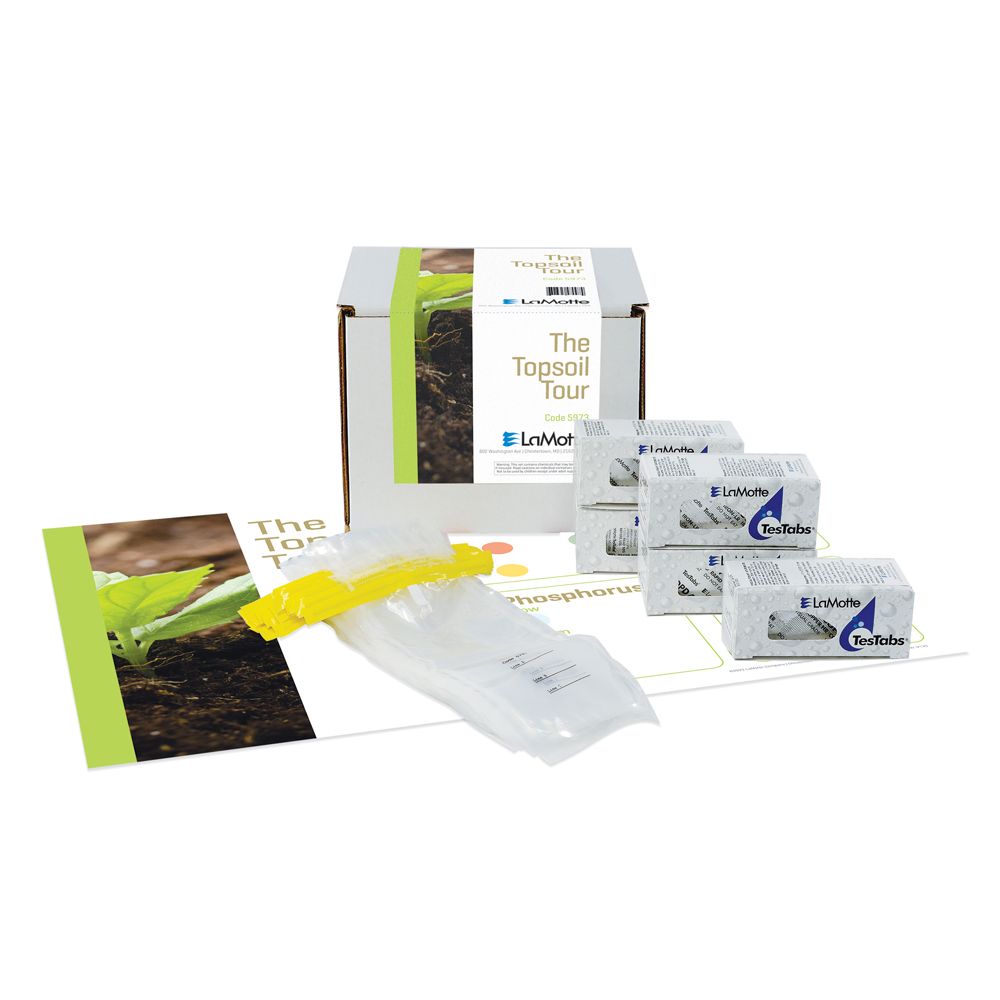
Soil looks quiet until students begin asking it questions. The Topsoil Tour turns locally collected samples into evidence about texture, acidity, nutrients, and plant growth. Each student can test soil for texture, pH, nitrogen, phosphorus, and potassium, then compare the physical and chemical properties of different samples.
Why it wins
- Testing materials and sample bags support a class of up to 50 students.
- The package includes lecture materials, illustrated handouts, teacher tips, procedures, data sheets, and reinforcement games.
- Students collect their own samples, giving the investigation a direct connection to gardens, agriculture, ecosystems, and the ground beneath their feet.
Good to know: Carolina lists the kit for Grade 4 and up and uses individually sealed, nonhazardous reagent tablets. The product is sold and shipped to schools and businesses rather than residential addresses, which makes it especially relevant to classroom buyers.
Best for: Teachers seeking a complete environmental science investigation for a full class, particularly during back-to-school season when outdoor sampling is still easy.
Final thoughts
The Topsoil Tour Classroom Testing Kit is the strongest overall purchase for a teacher serving a full class. It has the clearest curriculum support, the largest student capacity, and a satisfying path from collecting samples to interpreting evidence. The Ping-Pong Catapult Kit is our favorite small-group physics choice, especially when energy and motion need a little theatrical assistance. For mathematics, choose the Pythagorean Puzzle for a versatile proof tool or the Spiral of Theodorus for deeper work with square roots and irrational numbers. The Soda Center of Mass Kit delivers the most compact visual surprise.
Back-to-school science gets easier when the equipment gives students something worth arguing about, measuring twice, and trying again.
Frequently asked questions
Which Carolina science kit is best for a full classroom?
The LaMotte Topsoil Tour Kit includes testing materials and sample bags for up to 50 students, plus teacher guidance, procedures, handouts, and data sheets. The Garage Physics products contain materials for one student group per kit.
Are these science kits suitable for homeschoolers?
Yes. The Garage Physics kits are compact, hands-on activities suited to one student or a small homeschool group. Their guides support different learning levels. The Topsoil Tour has a much larger class capacity and is sold to schools and businesses, so homeschool buyers should confirm ordering eligibility with Carolina.
What grade levels can use the Garage Physics kits?
Carolina describes the line as designed for elementary and middle school students, with many concepts that also benefit high-school learners. Individual activities can be adjusted from basic observation and shape recognition to algebraic proofs, irrational numbers, and center-of-mass calculations.
Which kit requires the least classroom space?
The Pythagorean Puzzle, Spiral of Theodorus, and Soda Center of Mass kits fit naturally on a tabletop. The Ping-Pong Catapult needs a clear launch lane because Carolina reports distances greater than 20 feet.
Which kit connects science with the outdoors?
The Topsoil Tour asks students to collect and compare local soil samples. It connects chemistry and environmental science with plants, gardens, agriculture, and the living systems supported by soil.
Thanks for supporting our mission to make the world a better place for everyone, bugs included.